
When interacting with people who have irregular immigration status who do sex work in Canada, police often do not differentiate between consensual sex work and human trafficking.
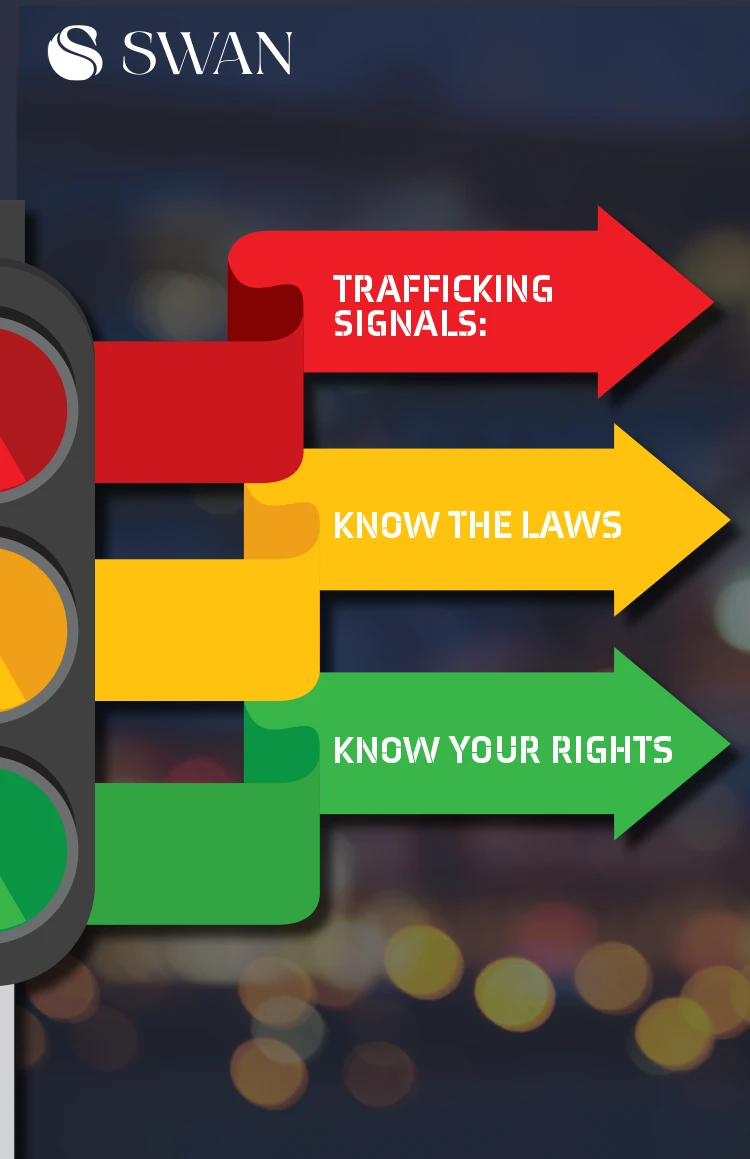
Even if you are not being trafficked, it is important to know the laws around human trafficking and how the laws affect you.
It is important to know your rights and how to respond and interact with police if they ask you if you are being “forced”.
If I'm not a permanent resident, can I work in the sex industry in Canada?
Immigration Regulations state that you cannot legally work for “an employer on a regular basis [that] offers striptease, erotic dance, escort services or erotic massages”
Work permits state: “not valid for employment in businesses related to the sex trade such as strip clubs, massage parlours or escort services”
What rights do I have when speaking with police officers?
You have a right to remain silent whenever you are speaking with you a police officer.
That means you do not have to answer any questions or tell the police your name. The main exception is if you are driving a car, and the police pull you over – you must give the police your licence, car registration and insurance documents. If you are a passenger in the car, you do not have to tell the police your name or show ID. If you are on a bicycle, you must show the police your ID if they ask for it.
You also have a right to know whether you are under arrest, and why you are under arrest or being detained.
If you have been detained or arrested, you have a right to speak to a lawyer without delay.
The information provided in this resource is for general informational and educational purposes only. It does not constitute legal advice and is not intended to be a substitute for professional legal counsel. You should consult a qualified attorney for advice regarding your specific legal situation. While we strive to ensure the information is accurate, laws and regulations frequently change.